
Quick Takeaways
- Garage floor paint is a thin topical finish. It is usually the lower-cost path, but it depends heavily on a clean slab and tends to wear faster than a professional coating.
- Professional full-flake coating systems are thicker, mechanically bonded, and built around surface preparation before the coating ever goes down.
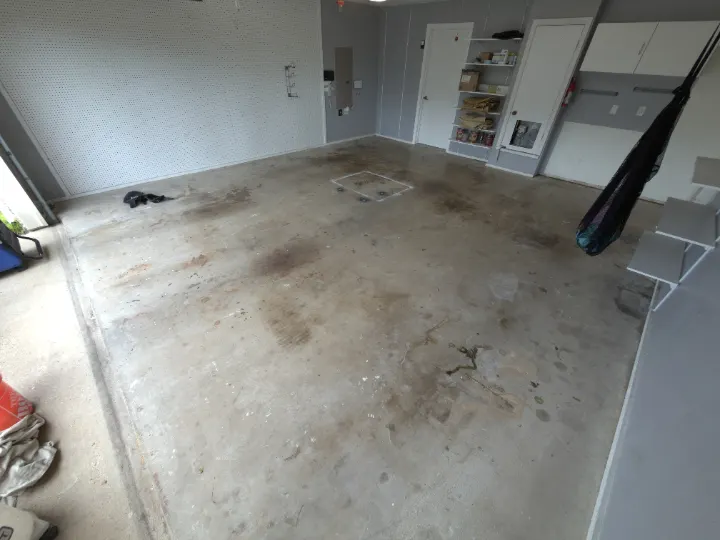
- If the floor has hot-tire marks, oil, moisture concerns, old coatings, or visible wear, prep and coating selection matter more than whether the label says garage floor paint, epoxy, polyurea, or polyaspartic.
Current Installed Planning Reference
The public estimator currently starts professional floor coating at $1,850. A standard 440-square-foot 2-car garage calculates to $2,640 before condition or finish upgrades.
These are planning figures. We inspect your slab and confirm preparation, repairs, coating layers and the final price in your written quote.
The Short Version
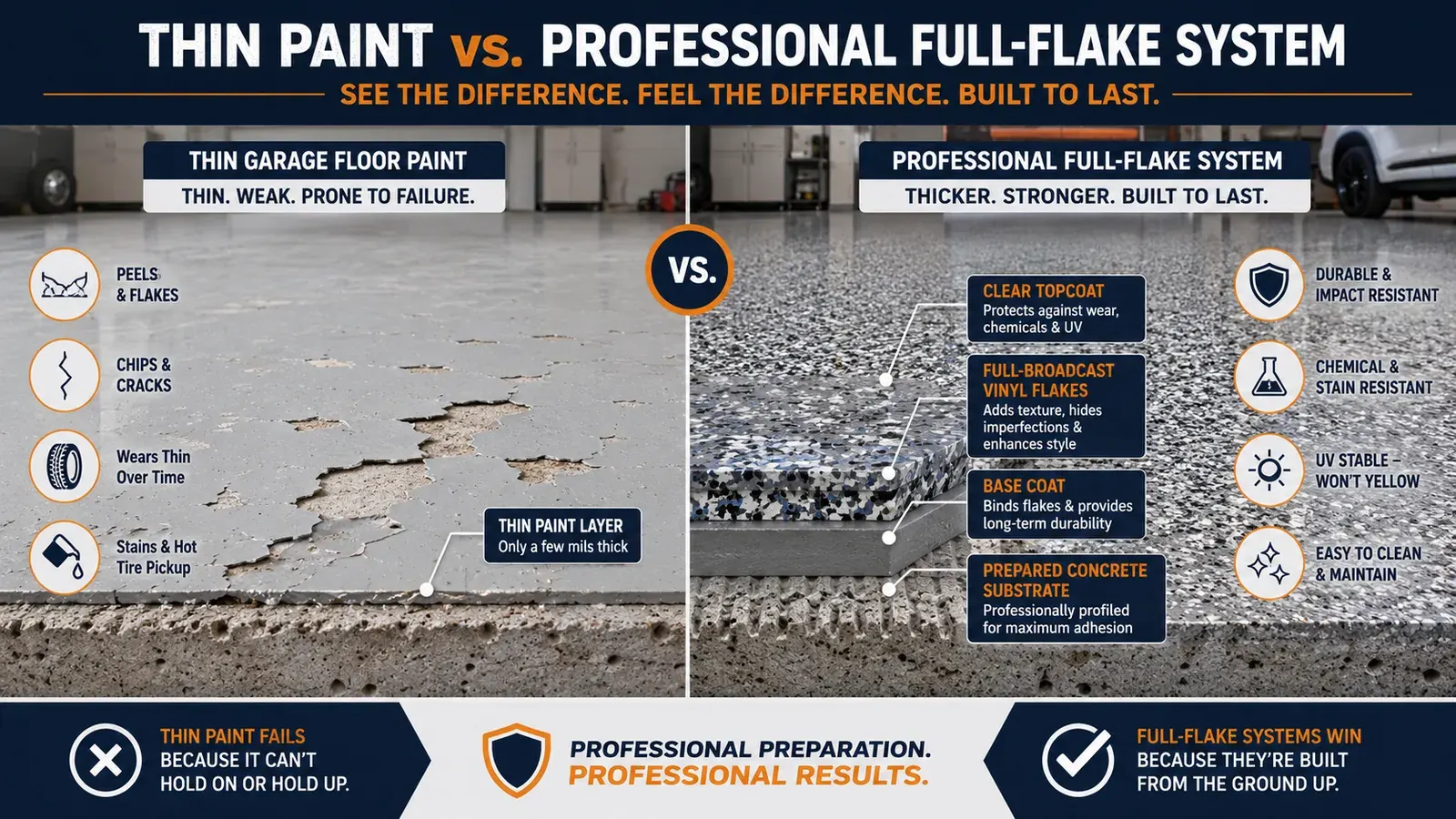
Garage floor paint is best thought of as a cosmetic coating for light-duty use. It can brighten bare concrete, but it does not create the same build thickness, texture, or protection as a full-flake professional garage floor coating.
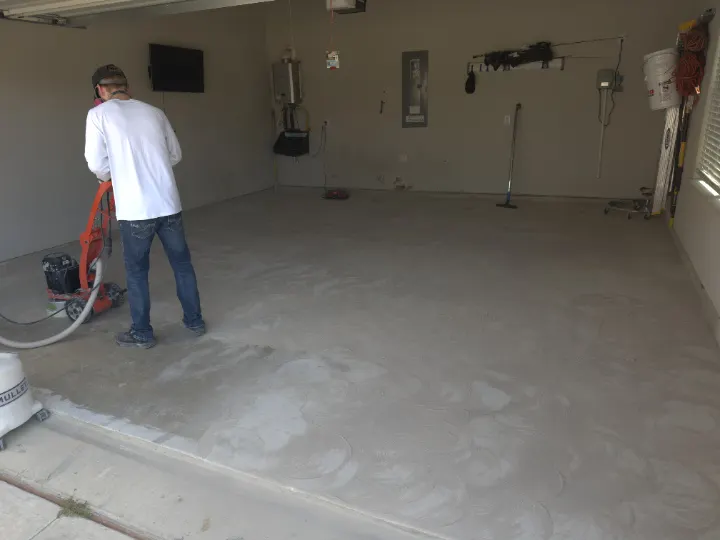
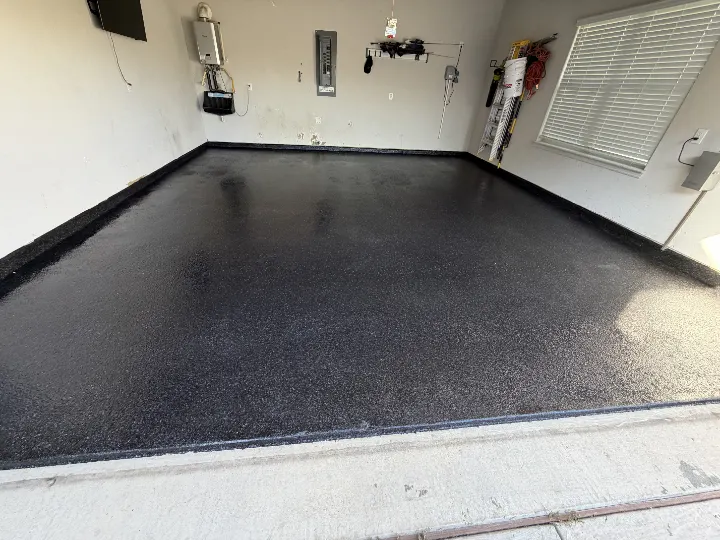
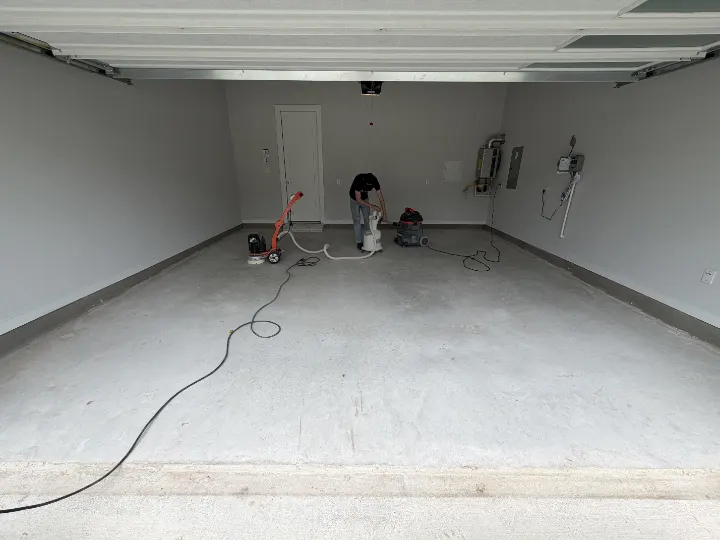
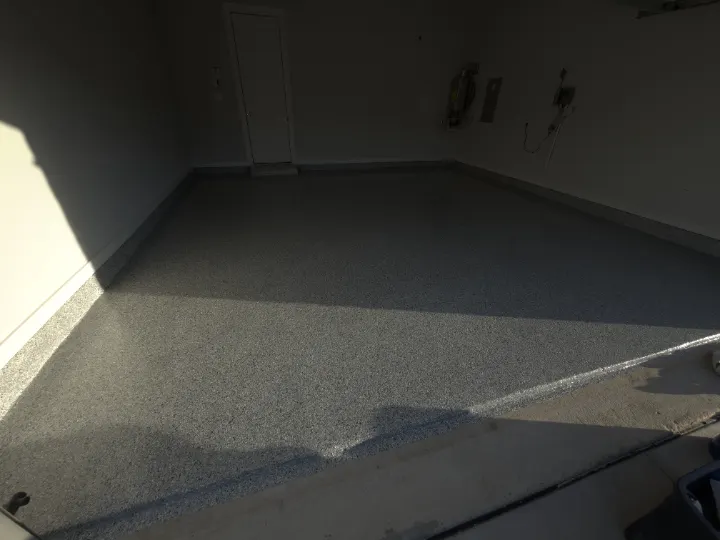
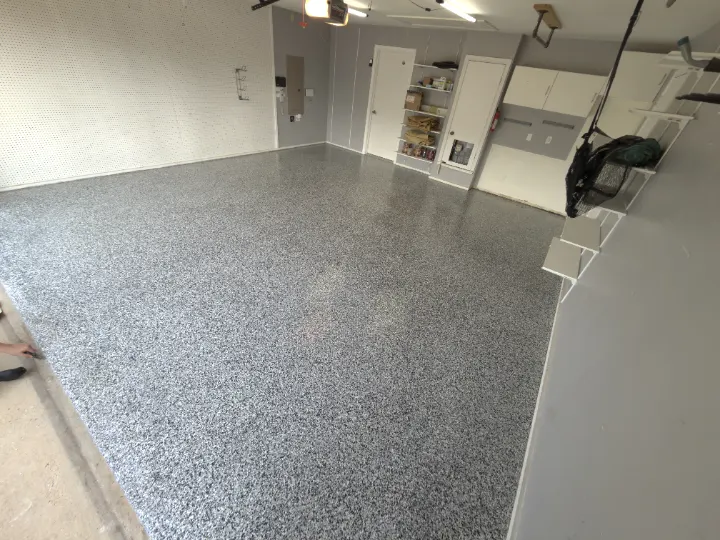
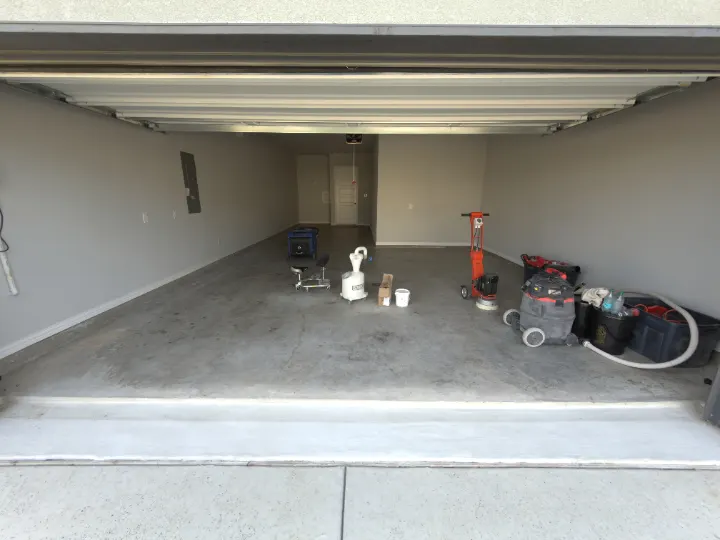
A professional garage floor paint and epoxy comparison should start with the slab, not the can. A floor coating system begins with mechanical preparation, repairs, a base coat, decorative flake broadcast, and a protective clear topcoat. That system is designed to bond into the concrete profile and handle normal garage traffic better over time.
| Decision factor | Garage floor paint | Professional full-flake coating |
|---|---|---|
| Surface preparation | Cleaning and product-specific etching or prep; weak prep can shorten the result. | Mechanical diamond grinding, correction as scoped, and a concrete profile matched to the system. |
| System build | Usually a thin topical film. | Base coat, full decorative flake broadcast, and a sealed protective wear surface. |
| Appearance | Solid-color cosmetic refresh that shows more slab variation and repairs. | Full-flake coverage adds texture and helps visually blend concrete variation and repaired areas. |
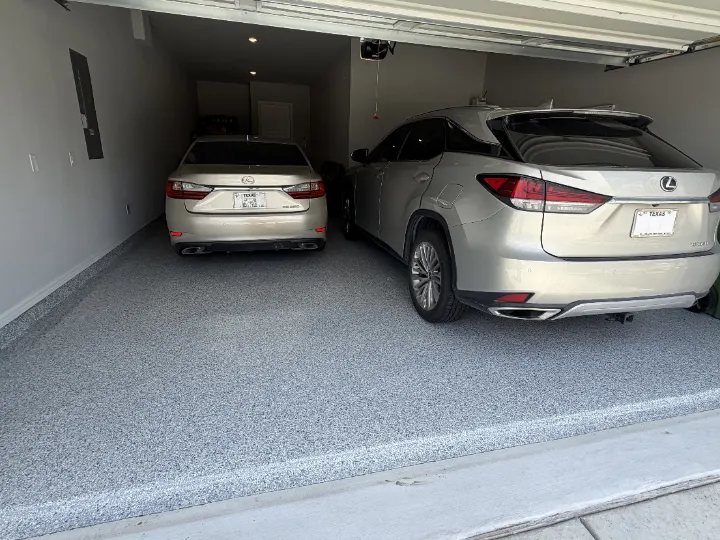
| Hot tires and traffic | More sensitive to preparation, tire heat, abrasion, and daily vehicle use. | Specified for normal garage traffic after the slab and use conditions are evaluated. |
| Moisture | Does not correct an underlying vapor or moisture problem. | The slab is evaluated; a qualifying mitigation layer is included only when the written scope calls for it. |
| Maintenance | May need touchups or recoating as the thin finish wears. | Routine grit removal, prompt spill cleanup, and compatible washing protect the sealed surface. |
| Repairability | Small touchups can be simple, but color and sheen may not match. | Localized repair is possible, though decorative texture and color matching require installer review. |
| Best use | Temporary or light-duty cosmetic improvement where budget leads the decision. | Primary garages, workshops, and finished spaces where preparation and a complete system matter. |
Where Paint Usually Falls Short
- Thin film build means less protection against abrasion and daily wear.
- Weak prep can lead to peeling, especially where tires sit or contaminants were not removed.
- Many paint finishes stay smoother, which can be slicker when wet unless an anti-slip additive is used.
- Paint does not hide repaired areas, concrete variation, and older slab marks as well as full-broadcast flake.
What a Professional Coating Adds
Mechanical Prep
Diamond grinding opens the concrete surface so the coating has a better profile to bite into.
Layered Build
The system includes a base coat, full flake broadcast, and clear topcoat instead of one thin paint layer.
Cleaner Appearance
Full-flake coverage helps hide concrete variation, repaired spots, and normal garage dust better than a solid paint film.
Service Fit
The installer can account for moisture, cracks, old coatings, and how the garage will actually be used.
Garage Floor Paint and Epoxy: The Practical Difference
Paint is usually a single thin layer. Professional epoxy-style garage floor coatings use a prepared concrete profile, a stronger base coat, decorative flake, and a sealed wear surface. That difference matters most in garages with hot tires, storage shelves, tools, lawn equipment, and daily vehicle traffic.
For DFW homeowners, the best choice depends on expectations. If you need a quick cosmetic refresh, paint may be enough. If you want the garage to feel like a finished room and stay easier to clean, a professional coating is usually the better fit.
When Paint Can Still Make Sense
Garage floor paint can be reasonable for a low-budget temporary refresh on clean, bare concrete when long-term durability is not the goal. It is also a practical choice for utility spaces where appearance matters more than traffic, hot tires, or chemical resistance.
For a primary garage, a workshop, a storage-heavy space, or a floor that needs to look finished for years, professional prep and a thicker coating system are usually the better investment.