
Quick Takeaways
- A full-flake floor depends on surface prep before appearance.
- The decorative flake layer is only one part of the system.
- Moisture, repairs, base coat chemistry, broadcast coverage, and topcoat selection affect long-term performance.
The Anatomy of the System
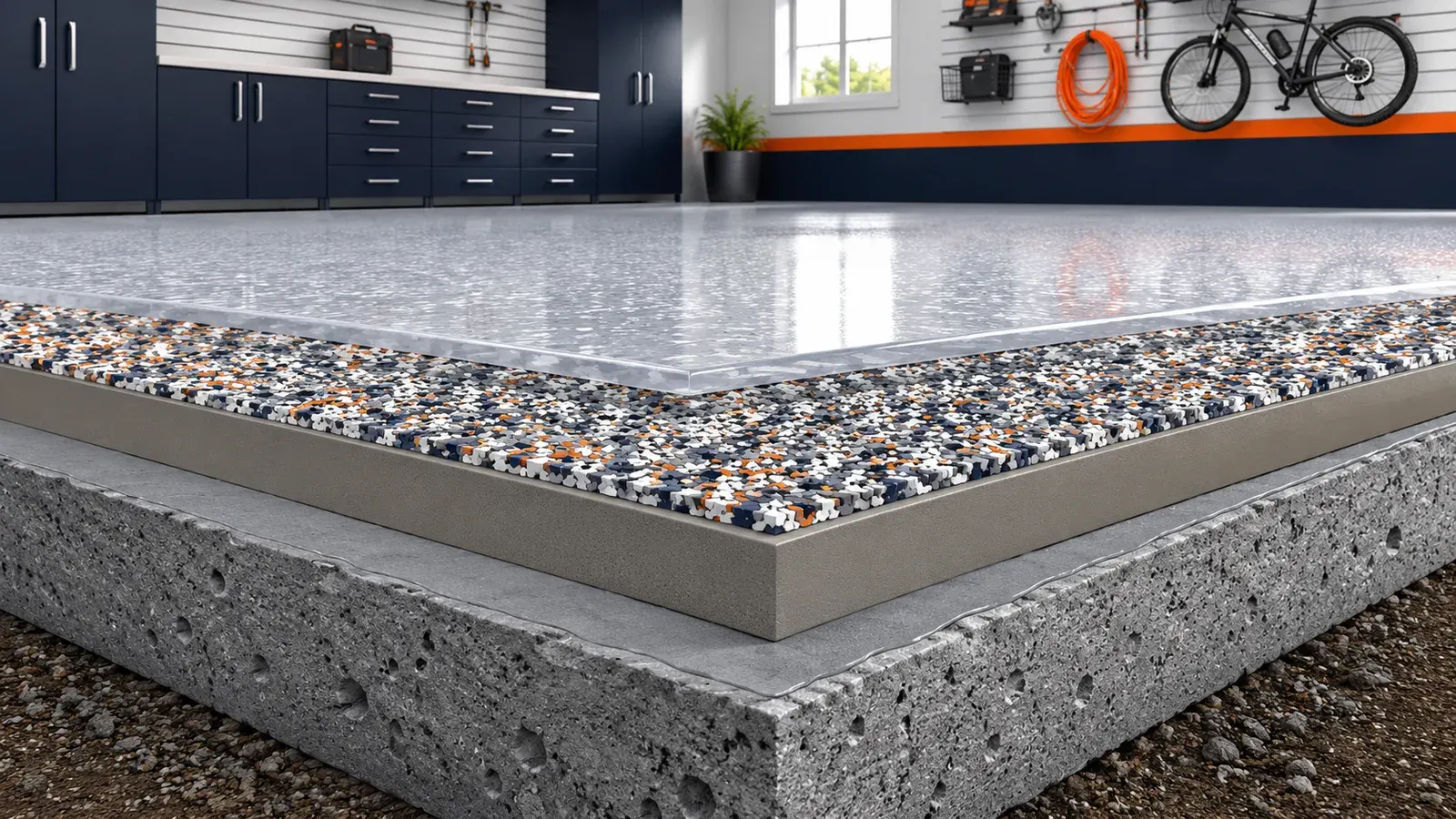
- Concrete slab inspected for cracks, contamination, and moisture risk.
- Mechanical preparation creates a bond profile.
- Cracks, pits, and spalls are repaired before coating.
- Base coat bonds to the slab and receives the flake broadcast.
- Full-broadcast flakes add appearance, texture, and visual coverage.
- Clear topcoat locks in the system and provides the wear surface.
What Shortcut Jobs Skip
Most failed floors do not fail because the color was wrong. They fail because something under the surface was rushed: weak prep, ignored moisture, contamination, thin coating build, poor repairs, or a topcoat that does not match the garage environment.
That is why a knowledgeable installer matters. The finished floor may look simple, but the decisions under the flake layer carry the durability.
Questions to Ask Before You Hire
- Do you diamond grind the slab?
- What surface profile are you targeting?
- Do you recommend a moisture-vapor barrier proactively, and is it included in this scope?
- How do you repair cracks, pits, and spalls?
- What base coat and topcoat chemistry do you use?
- Is the topcoat UV-stable and available with traction texture?