

Start Here
The 30-second answer
Epoxy, polyurea, and polyaspartic are not three versions of the same floor. They are coating families that can play different jobs inside a full-broadcast flake system. The best garage floor is selected as a layered system, not bought by one chemistry name.
Good for build and value
Epoxy
- Best for
- Longer working time, useful build thickness, and some moisture-vapor systems when the product is made for that job.
- Watch out for
- Many standard epoxies cure slower and can amber or yellow when sunlight reaches them.
- Typical role
- Often a primer, base coat, build layer, or moisture-control layer rather than the exposed clear wear surface.
Good for fast base coats
Polyurea
- Best for
- Fast cure, flexibility, and a strong role as a base coat that receives a full-flake broadcast.
- Watch out for
- Short working time makes installer timing critical. Many polyureas are aromatic, so they are not ideal as exposed UV topcoats.
- Typical role
- Commonly used under the flake layer when speed, bond, and flexibility matter.
Good for UV-stable topcoats
Polyaspartic
- Best for
- Fast return to service, clear gloss, UV stability, abrasion resistance, and color retention.
- Watch out for
- It still depends on prep, slab moisture, product limits, and correct installation. It is not magic in a bucket.
- Typical role
- Often the clear topcoat over full-broadcast flakes, and sometimes a full-system option when specified.
Plain-English Definitions
What is polyaspartic, polyurea, and epoxy?
If you searched for "what is polyaspartic" or "epoxy vs polyurea," this is the part to read first. The words describe chemistry families, but the quote should explain what each product does in the actual floor system.
What is polyaspartic?
Polyaspartic is a fast-curing aliphatic coating technology often used as a clear garage floor topcoat. In plain English, it is popular because it can protect the visible wear surface while resisting UV yellowing better than many standard epoxies and aromatic polyureas.
What is polyurea?
Polyurea is a fast-reacting coating family known for flexibility and quick cure. In residential full-flake floors, it is often used as a base coat because it can bond to prepared concrete and hold broadcast flakes when installed within the correct working time.
What is epoxy?
Epoxy is a broad coating family with longer working time and good build potential. It can be useful as a primer, base layer, or moisture-vapor product when that specific epoxy is designed for the slab condition.
Epoxy vs polyurea
Most homeowners are really comparing working time and build against fast cure and flexibility. Epoxy can give an installer more open time; polyurea can return the garage faster but gives the crew less margin for error.
Polyurea vs polyaspartic
Polyurea is often discussed as the fast base layer. Polyaspartic is often discussed as the exposed topcoat because aliphatic polyaspartics are commonly chosen for UV stability and gloss retention.
Epoxy vs polyaspartic
Epoxy may still make sense below the decorative system or where a specialty moisture product is required. Polyaspartic often wins the topcoat conversation when sunlight, fast cure, and long-term appearance matter.
Full-Flake Floors
A coating is a system, not a single bucket
Homeowners usually see the finished flakes and shine. The important decisions are underneath: concrete prep, moisture risk, repair method, base coat, broadcast density, topcoat, and texture.
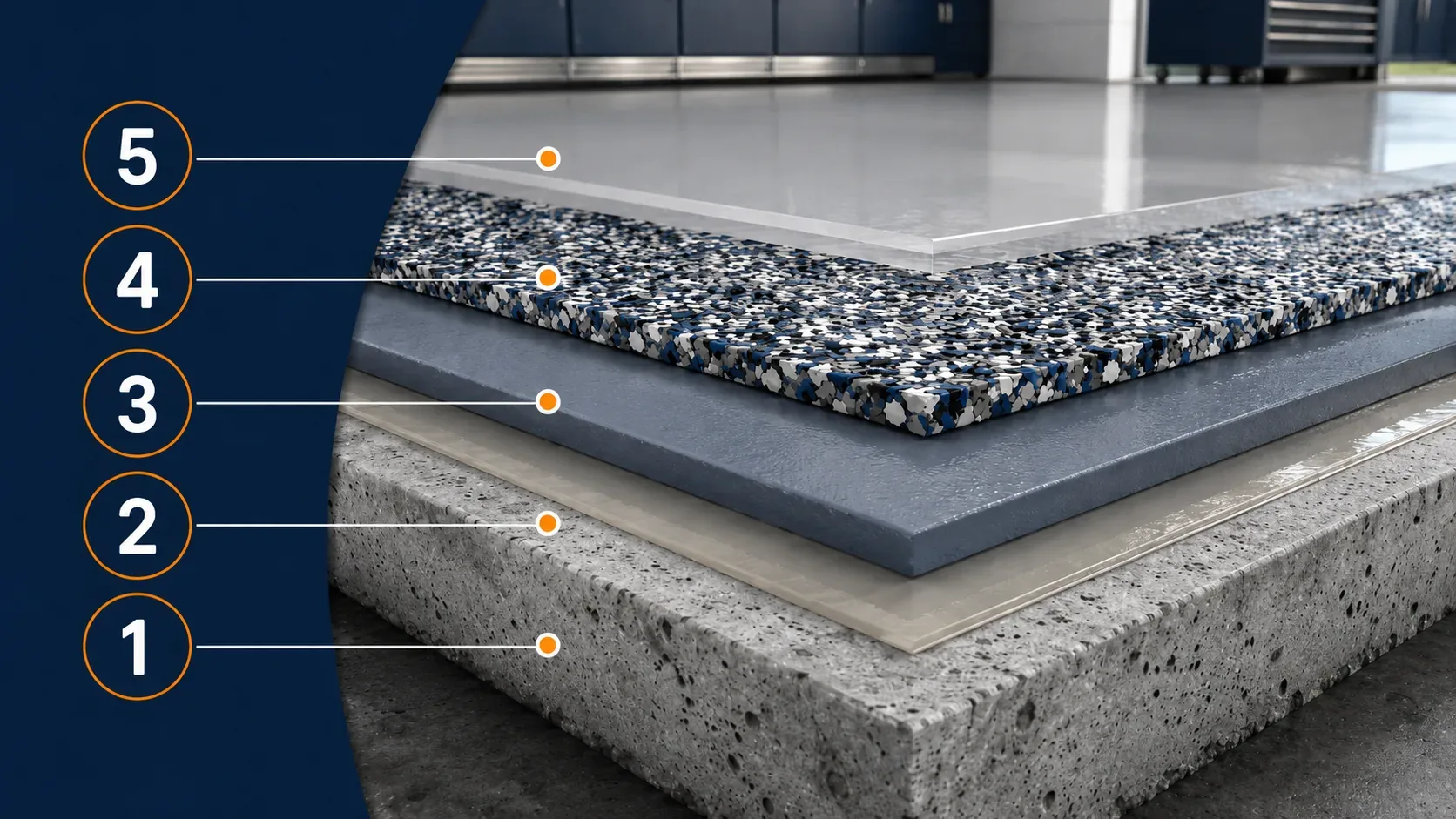
- 11. Prepared concreteThe slab is inspected, cleaned, and mechanically ground so the coating bonds to sound concrete instead of dust, sealer, or weak surface paste.
- 22. Moisture or primer layerIf the slab needs moisture protection or a special primer, that choice belongs below the decorative system and should be written into the quote.
- 33. Base coatThe base coat is chosen for bond, timing, slab conditions, and how well it holds the flake broadcast.
- 44. Full-flake broadcastFlakes are broadcast to refusal for appearance, texture, and visual coverage. This is why the finished floor looks consistent.
- 55. Clear topcoatThe topcoat becomes the wear surface. UV stability, abrasion resistance, traction texture, and recoat timing matter here.
Compare The Chemistry
Epoxy vs polyurea vs polyaspartic at a glance
These are practical homeowner comparisons, not universal product promises. Two brands can use the same chemistry name and still behave differently because the formula, solids content, hardener, thickness, and install window are different.
| Feature | Epoxy | Polyurea | Polyaspartic |
|---|---|---|---|
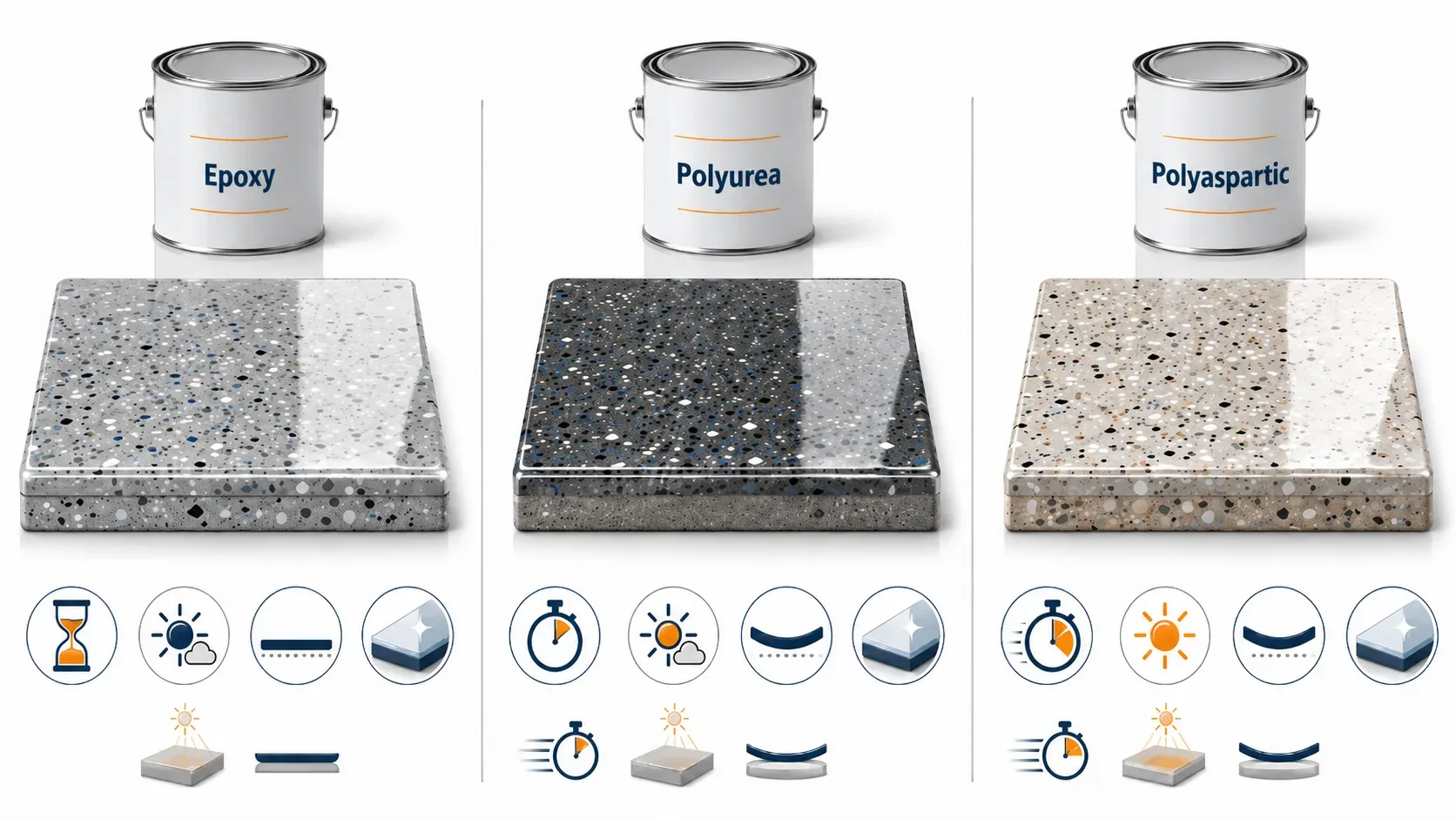
| Working time | Longer and more forgiving | Very short; installer-sensitive | Short to moderate, product-dependent |
| Cure speed | Usually slower | Very fast | Fast |
| UV and color | Varies; many standard systems can amber | Aromatic versions can discolor if exposed | Aliphatic versions are commonly chosen for UV stability |
| Flexibility | More rigid unless modified | Flexible | Good flexibility with a harder wear surface |
| Moisture considerations | Some vapor-barrier epoxies are made for moisture control | Not automatically a moisture solution | Not a substitute for a moisture-mitigation layer |
| Common full-flake role | Primer, base, build, or MVB layer | Fast base coat under flake | Clear topcoat or full-system option |
| Relative material cost | Lower to medium | Medium | Medium to higher |
System Selection
Why pros mix chemistries
The bottom layer and top layer do different jobs. A base coat needs to bond, wet the concrete, and hold flakes. A topcoat needs to protect the visible surface from tires, grit, sunlight, chemicals, and cleaning.
Polyurea base + polyaspartic topcoat
A common professional residential approach: the base coat grabs the prepared slab and receives the flakes, then the polyaspartic topcoat protects the visible surface from wear, gloss loss, and sunlight exposure.
Epoxy or MVB base + UV-stable topcoat
If the slab has moisture risk or needs a product designed for higher vapor tolerance, the lower layer may change. The topcoat still needs to match the garage's sunlight, traffic, and chemical exposure.
All-polyaspartic systems
Some systems use polyaspartic for both base and top layers. That can be a strong choice when the product is designed for direct-to-concrete use and the installer has the right timing, temperature, and recoat window.
Ace Garage Pros commonly explains the residential full-flake stack as diamond grinding, crack repair as needed, a selected base coat, full flake broadcast, and a durable protective topcoat. If moisture risk, an older slab, or heavy-use conditions change the best system, the written quote should say so.
Brand And Formula
Why the brand can matter as much as the chemistry name
"Polyurea" or "polyaspartic" on a proposal does not tell you everything. Ask what product is being installed, what layer it is used for, what the technical data says, and what the warranty actually covers.
Aromatic vs aliphatic
These words matter. Aromatic products are often strong below the flake layer but can discolor in UV. Aliphatic chemistry is usually what you want exposed to sunlight.
Solids and film build
Two products with the same chemistry name can leave different thickness on the floor. The amount left after cure affects wear life and appearance.
Pot life and recoat window
Fast products are only an advantage when the crew can place them correctly. Missed timing can affect adhesion between layers.
Moisture limits
A coating name does not solve vapor pressure. If the slab has moisture risk, the written system should name the moisture-control product and its limits.
Data sheets and warranty terms
Brand quality shows up in technical data, preparation requirements, cure windows, UV claims, and the exclusions in the written warranty.
Installer fit
A premium product installed outside its temperature, humidity, thickness, or timing window can still fail. The system and the installer have to match.
Homeowner Priority
What should you care about?
I want the garage back fast
Prioritize a fast-cure system and an installer who can manage short working windows cleanly.
My garage gets sunlight
Prioritize an aliphatic, UV-stable topcoat for the exposed surface.
My slab is older or damp
Prioritize inspection, moisture evaluation, and the right lower layer over the coating name alone.
I want the best value
Compare prep, repairs, flake broadcast, topcoat, texture, and written warranty before comparing price.
The garage works hard
Ask whether an extra topcoat, traction additive, or different system build makes sense for your use.