

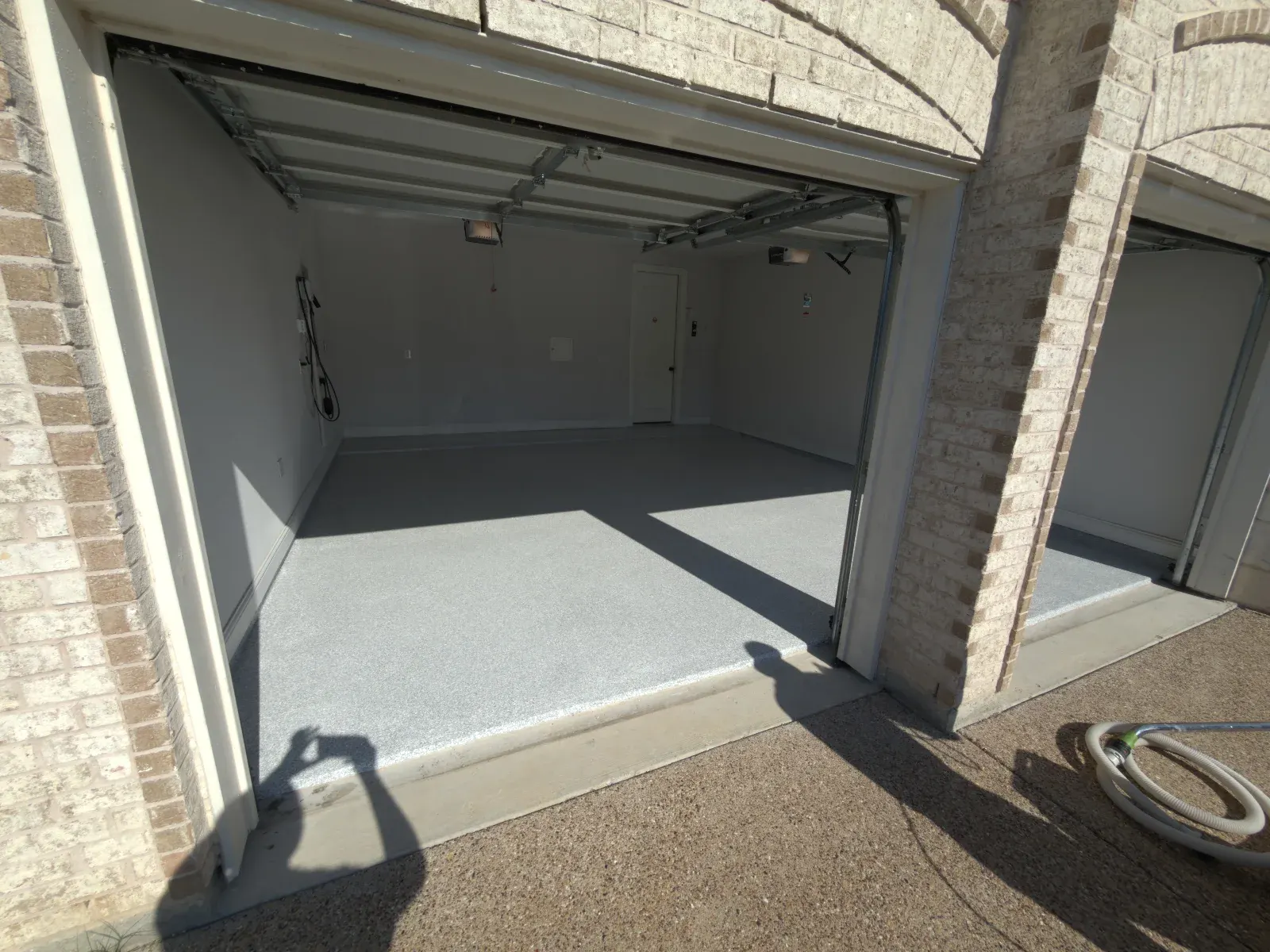
The short answer
What to know first
- Preparation includes the existing surface, removal work, cleanliness, repairs, and the profile required by the selected coating system.
- We proactively recommend optional Diama-Epoxy MVR Slow Cure moisture-vapor protection for DFW garages. We price it separately and confirm suitability for the slab before installation.
- MVB is a separate selected layer with limits. It does not repair leaks, structural movement, or every possible cause of coating failure.
Start with what you can see—and what you know
Before the visit, note old paint or coatings, oil spots, cracks, pits, previous repairs, and places where water has appeared. Photos and a brief history help explain the project. Point out a known plumbing leak or rainwater entering at the opening even if the floor is dry that day.
A visible condition is a starting point for discussion, not a complete diagnosis. A dark patch does not establish a moisture reading, and an old coating's appearance does not tell you everything about its bond. Ace does not perform moisture testing.
Separate removal, cleaning, and repairs
A preparation plan must account for material already on the slab. Existing coatings and contaminants can require different work from an uncoated, sound surface. Mechanical preparation does not make a heavily contaminated floor automatically suitable; cleaning and additional preparation may be needed.
Ask which cracks, pits, and surface repairs are included and how additional work is priced if uncovered. A decorative coating is not a structural slab repair, and a filled crack can become visible again if the concrete moves. Discuss joints and active movement before expecting a seamless appearance everywhere.
References: Sherwin-Williams: concrete surface preparation guide · Ace Garage Pros: written warranty terms
Diamond grinding versus acid etching
Diamond grinding mechanically works the surface. Ace uses mechanical grinding in its floor-coating preparation. The goal is a clean, sound surface with a profile suited to the selected system—not simply the roughest possible concrete. The method and tooling have to address the actual slab and existing material.
Acid etching chemically reacts with concrete and requires careful cleanup. Sherwin-Williams warns that it can leave an uneven profile and residue that interferes with bonding. Its resinous-floor guidance advises against using it for preparation. Grinding and etching should not be treated as interchangeable line items on a quote.
Ask how the contractor handles edges, old coatings, debris, and the required profile. The answer is more useful than a promise that any one machine or preparation method guarantees the floor can never fail.
References: Sherwin-Williams: concrete surface preparation guide · Sherwin-Williams: limitations of acid etching
Where a moisture vapor barrier fits
When selected, Diama-Epoxy MVR Slow Cure goes on mechanically prepared concrete beneath the decorative layers. DiamaPro specifies two coats totaling 16 mils for the published moisture-vapor performance. New concrete must be at least 30 days old for this product.
The National Weather Service describes DFW as humid subtropical, with hot summers and considerable rainfall variation. That regional context explains the business recommendation; it does not prove a moisture condition beneath your particular garage.
Ace does not perform moisture testing. The MVR bulletin lists slab moisture limits, site checks and a small test area before installation. Confirm how the substrate will be evaluated and the applicable requirements documented before the product is applied. The written warranty describes the conditions for coverage.
A floor is a system of layers
- Clear topcoatDiama-Spartic 85 Slow Cure protects the flake finish
- Decorative flakeColor, pattern, and texture
- Pigmented base coatDiama-Epoxy Slow Cure holds the flake
- Optional MVBDiama-Epoxy MVR Slow Cure moisture protection
- Prepared concreteThe foundation beneath every layer
References: Diama-Epoxy MVR Slow Cure · ICRI: public description of its concrete moisture-mitigation guide · National Weather Service: Dallas/Fort Worth climate · Ace Garage Pros: written warranty terms
Conditions that need a separate conversation
Water entering through a wall, a plumbing leak, flooding, moving concrete, and moisture outside a product's limits are not solved merely by adding MVB. Tell Ace about these conditions before work begins so they can be addressed in the project discussion.
Written coverage has conditions and exclusions. Keep the signed scope, selected system, and warranty together. If moisture protection is an important reason for the purchase, ask how those documents apply to the work being proposed rather than relying on a broad phrase such as waterproof floor.
References: Ace Garage Pros: written warranty terms
Put the important details in writing
- Area and surfaces included, including steps or vertical details.
- Existing-coating removal, preparation method, and included repair work.
- How additional repair or contamination work is approved and priced.
- Whether MVB is included, optional, or excluded, with the selected product named.
- Coating layers, schedule, access, aftercare, and applicable written terms.
Sources and further reading
Product instructions apply to the named product and conditions. Your agreed scope and project-specific instructions describe your installation.
Your next useful step