
Quick Takeaways
DIY epoxy kit comparison takeaways
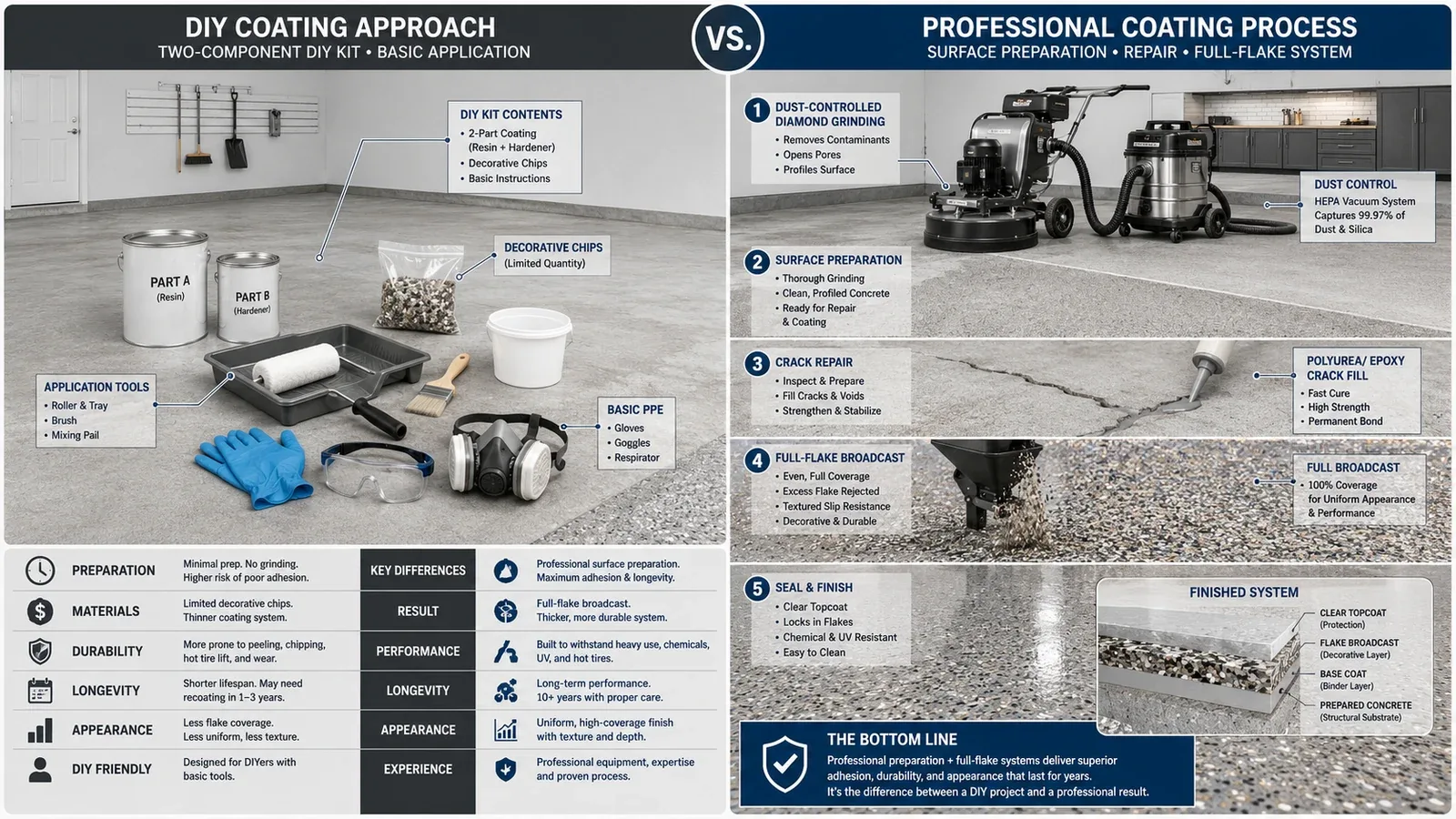
- The box price is a starting material cost. An apples-to-apples DIY total also includes qualifying coverage, preparation, repairs, tools, safety supplies, optional layers, cleanup, time, and correction risk.
- Compare the same finished scope: slab condition, moisture plan, preparation profile, repairs, coating layers, flake coverage, traction, cure protection, and written responsibility.
- DIY can fit a sound slab and controlled expectations. Professional value comes from equipment, crew execution, a defined installed system, aftercare, and a qualifying written remedy—not a chemistry name by itself.
The Real Cost Math
Start with equivalent finished scopes, not two different starting prices
A kit price and a professional proposal are not automatically prices for the same result. The kit may cover the coating material for a qualifying slab. A proposal may also cover evaluation, preparation equipment, dust control, included light repairs, several coating layers, labor, cleanup, aftercare, and a written workmanship remedy. Added options and separately quoted work should be identified rather than assumed. Neither route is always the right answer; the useful comparison puts every required line on both sides.
DIY Total
More than the box on the shelf
Required kit quantity + cleaning and preparation + repairs + tools and protective equipment + optional flake, clear coat, and traction + disposal + project time + a correction contingency.
Professional Total
The written scope plus selected options
Agreed preparation and coating system + documented options and change-order triggers + temporary parking or storage logistics. The final on-site quote should identify what is included rather than leaving the homeowner to infer it.
Apples to Apples
Compare what reaches the floor, what prepares it, and who owns the result
“Epoxy” is a broad chemistry name, not a complete scope. A one-coat consumer epoxy, a moisture-control epoxy, a polyurea base under full flake, and a clear polyaspartic wear coat do different jobs. Use the coating chemistry guide to compare layer roles, then ask the same questions on both sides of this decision.
Coverage and material
Calculate from measured square footage, the exact product’s published coverage at its required film thickness, slab porosity, waste, and every planned coat. “One-car” or “two-car” is not a measurement.
Existing surface
Sealers, weak paint, old coatings, oil, laitance, and unsound concrete can change the preparation or make a selected product unsuitable.
Repairs and joints
Cracks, pits, and spalls require compatible preparation and repair materials. Concrete movement is a separate condition and cannot be priced like a cosmetic pinhole.
Moisture plan
Confirm the product’s slab-moisture limitations and whether a separate qualifying moisture-vapor layer is part of the system.
Finish and traction
Compare decorative coverage, clear wear coat, UV exposure, gloss, texture, and traction treatment. A few loose chips are not the same scope as a full broadcast encapsulated by a topcoat.
Labor and responsibility
Include setup, prep, application, cleanup, cure protection, and the remedy available if covered workmanship or material failure occurs.
A Representative DIY Kit
Read the technical sheet before multiplying the shelf price
Rust-Oleum’s current EpoxyShield Garage Floor Coating is one useful example of why the exact instructions matter. Its technical sheet describes a two-component, water-based epoxy for sound concrete without curing agents or sealers and says it is not intended for unsound previous coatings or floors with a moisture problem. It lists practical coverage of approximately 250 square feet at the recommended dry-film thickness. That number belongs to that product; it is not a universal DIY-kit allowance.
The same manufacturer calls preparation critical, gives separate directions for sealed, painted, damaged, and bare concrete, and tells users with multiple kits how to intermix base components for color consistency. Its product page recommends an optional clear coating for added protection, while the technical sheet treats anti-skid material as a separate choice. A shopper doing honest math should therefore price the system the instructions require—not assume every finishing item is inside the base kit.
This does not make a DIY kit a bad product. It defines the conditions where that product is meant to work. A sound, appropriately prepared utility area with modest finish expectations is different from a daily-use garage with an old coating, repairs, direct sun at the threshold, or a moisture concern. The paint-versus-coating guide helps separate a cosmetic refresh from a layered floor system.
The Hidden Work
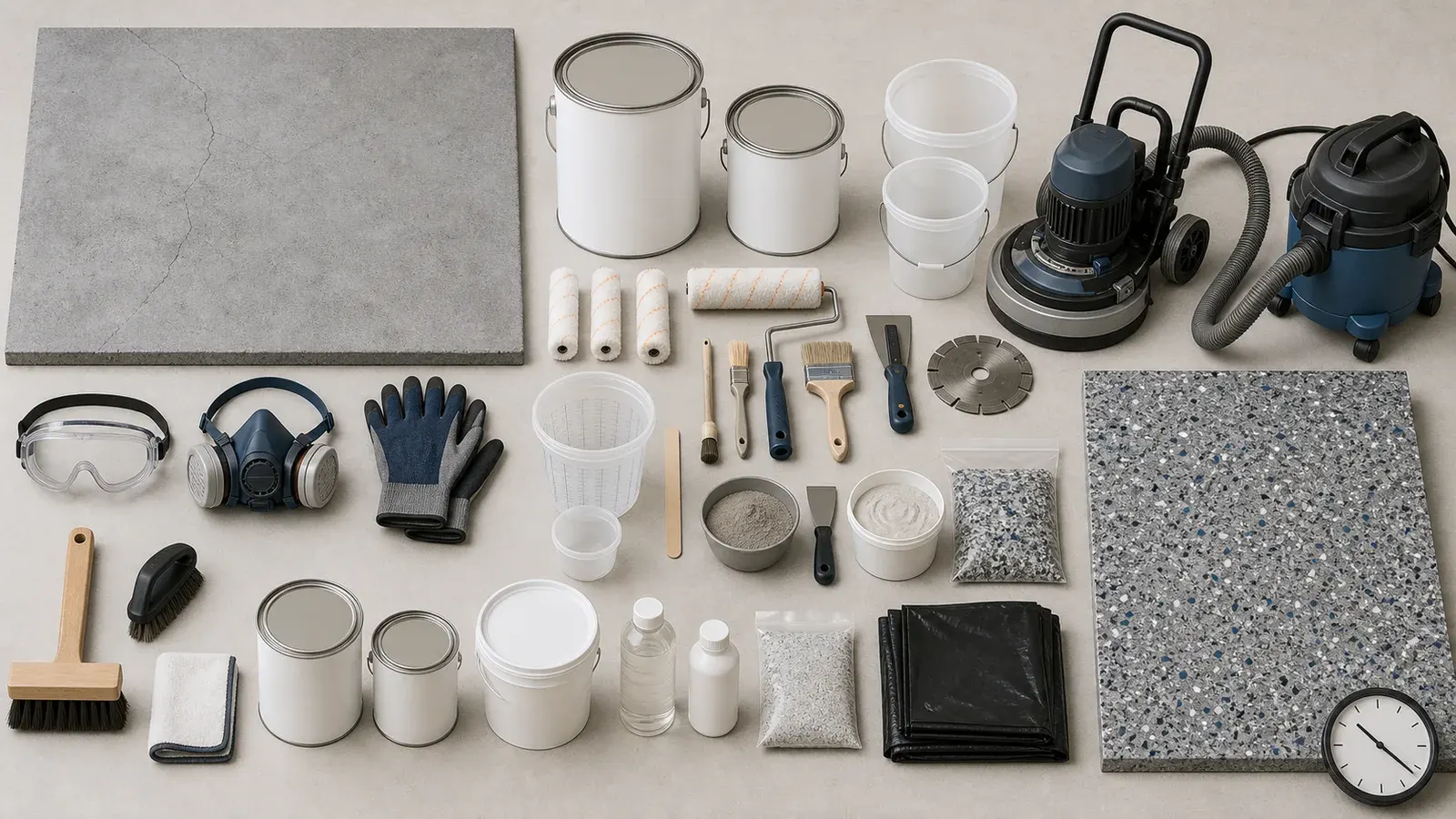
Preparation can cost more effort than application
ICRI’s concrete-preparation guidance starts with the substrate, the material being installed, and job-site conditions. Its goal is a clean, sound, roughened surface with bond breakers and unsound material removed, pores opened, and the specified profile created. For a high-build coating example, it identifies CSP 3–5 as a possible required range and says the coating manufacturer’s instructions still control. That is broader than simply making concrete look less smooth.
Ace’s owner-confirmed standard process diamond grinds the slab to ICRI CSP 3 and removes the dust. Light repair for hairline cracks and small pits or spalls is included: the crew opens cracks with a crack-chase blade, fills repair areas with epoxy repair material, and grinds the repairs flush before the first coating layer. Existing-coating removal is an additional quoted scope and uses tooling selected for the material being removed. Extensive concrete repair is also priced separately after an on-site inspection. See the grinding-versus-acid-etch guide for the difference between Ace’s mechanical process and the preparation specified by some consumer kits.
A DIY calculation should include every rented or purchased tool needed for the chosen method: compatible grinder tooling, dust shroud and extractor, edge work, crack repair, mixing and application tools, cleanup supplies, and protective equipment. Concrete grinding can generate respirable crystalline silica. OSHA’s construction guidance for professional work identifies integrated water delivery or manufacturer-recommended dust collection for walk-behind floor grinders and HEPA vacuuming between passes indoors. Homeowners should follow the equipment instructions, coating safety data sheets, and applicable safety requirements rather than treating visible dust as the only test.
What Ace’s Scope Buys
The professional price is the installed system and accountable scope
For a qualifying residential project, Ace’s confirmed standard system uses CFS-CTR Polyurea as the pigmented base coat, Torginol polymer flake at full broadcast, CFS-2C Polyaspartic as the clear topcoat, and aluminum oxide when additional traction texture is selected. The standard package includes light repair for hairline cracks and small pits or spalls. CFS-CTR Moisture Vapor Barrier is an added option offered proactively for DFW slabs rather than being made dependent on one routine moisture reading. Existing-coating removal and extensive concrete repair are additional costs quoted after an on-site inspection. The signed quote must state the actual layers, included light repairs, options, and additional work.
Manufacturer documents show why material quantity is only part of execution. The CFS one-day instructions require controlled coverage, complete mixing, short working windows, immediate flake broadcast, removal of excess flake, and timed topcoat placement. Torginol’s data provides different full-broadcast coverage ranges by flake size, while CFS publishes a separate topcoat coverage range over full flake. Crew planning, batch management, tools, and experience are part of delivering those materials at the intended rate.
Defined preparation
CSP 3 grinding, dust removal, and included light repair for hairline cracks and small pits or spalls.
Named layer stack
The proposal identifies the base coat, full flake, topcoat, traction treatment, and MVB when that added option is selected.
Return-to-service plan
Ace’s project-specific aftercare is attached to the invoice instead of leaving traffic timing to a generic online summary.
Written remedy
Qualifying work is evaluated under the signed scope and Ace’s written limited warranty, including its conditions and exclusions.
Time and Correction Risk
Count the first attempt—and the possible reset
DIY time includes clearing the garage, cleaning, drying, preparation, repairs, shopping or rental pickup, mixing, edge work, application, cleanup, and protecting the cure window. Product working times can change with temperature, so DFW heat is a scheduling variable rather than permission to rush or ignore the technical sheet.
A correction contingency is not a prediction that DIY will fail. It recognizes that an unacceptable coating may need mechanical removal before another system can be installed. That reset can add removal tooling, labor, disposal, new repairs, and replacement materials. A professional installation is not failure-proof either; the difference is whether the written agreement provides a covered remedy. The hot-tire pickup guide explains why marks and actual coating loss require different diagnoses.
DIY Can Fit When
Scope and expectations are controlled
- The slab is sound and fits the exact product limitations.
- The homeowner can complete the required prep and safety steps.
- A simpler finish and owner-managed cure window are acceptable.
- The budget includes every tool, layer, and correction allowance.
Professional Work Can Fit When
The garage needs a managed system
- Old coating removal, extensive repairs, or the added MVB option affect scope.
- Full-flake coverage and a separate clear wear coat are priorities.
- The homeowner values equipment, crew execution, and cleanup.
- A written scope, aftercare process, and qualifying warranty matter.
Make the Decision in Your Garage
Price the actual slab and the finish you expect
Use the DFW coating cost guide to identify scope drivers and the quote comparison guide to normalize proposals. The full-flake system guide shows the professional layer stack, while the DFW moisture barrier guide explains Ace’s proactive recommendation. If scheduling affects the decision, review the day-by-day coating timeline.
Explore Ace’s DFW garage floor coating service, browse completed floor coating projects, or build a planning range with the garage floor estimator. For an apples-to-apples scope based on the concrete in front of you, request an on-site quote. The estimator is not a final price; the written quote controls.
Ace’s current written terms provide a 15-year limited floor-coating warranty for qualifying residential interior systems, subject to the signed scope, covered causes, exclusions, and claim process. That is not a promise that concrete cannot crack, move, stain, wear, or suffer damage. Read the complete warranty before treating any warranty period as a dollar value.
Primary technical references
The Rust-Oleum source is a representative consumer-kit example, not an Ace product recommendation. The CFS and Torginol sources describe Ace’s owner-confirmed professional products. Product instructions and the signed project scope control over this general comparison.
- Rust-Oleum: EpoxyShield Garage Floor Coating Kit
- Rust-Oleum: EpoxyShield Water-Based Epoxy Technical Data
- International Concrete Repair Institute: concrete surface-preparation guidance
- OSHA: respirable crystalline silica controls for construction work
- Concrete Floor Solutions: installation instruction library, plus the current CFS technical sheets supplied to Ace
- Torginol: Polymer Flake Technical Data Sheet