
Quick Takeaways
- Complete disruptive door, opener, track, electrical, and overhead work before final flooring when practical, then protect every finished surface during later service.
- Compatible quieter rollers and a Chamberlain belt-drive or wall-mount option may improve daily use, but balance, track, mounting, door construction, and room geometry still control.
- Plan lighting, attic access, lifts, ceiling racks, wall storage, controls, outlets, photo eyes, vehicles, and future service access as one layout.
Prioritize the Upgrade by Daily Friction
Noise and Motion
Inspect rollers, hinges, tracks, balance, mounting, opener drive, and vibration before assuming one new part will make the system quiet.
Reliable Access
Review the opener, wall control, remotes, keypad, smart-access goals, household use, power, Wi-Fi, and manual release.
Lighting and Backup
Coordinate opener lighting, ceiling fixtures, shadows, outlets, battery-backup goals, and service clearances.
Weather and Cleanliness
Compatible bottom and perimeter seals can help with ordinary light, drafts, and dust, but do not correct a damaged panel, uneven slab, drainage, or structural gap.
Chain, Belt and Wall-Mount Decisions
A Chamberlain belt-drive opener can be a practical finished-garage choice when reducing drive-system noise matters. A chain-drive configuration may suit other priorities. A compatible wall-mount layout can preserve the center ceiling, but only when the torsion shaft, side room, wiring, track, cable arrangement, and current manufacturer requirements support it.
Ace installs new Chamberlain openers only. The written quote identifies the current model, mounting layout, controls, features, assumptions, and compatible door work without implying a dealer relationship or universal fit.
Protect Clearances and Future Service
- Keep overhead racks, lifts, lights, attic ladders, and door tracks out of each other's operating and service envelopes.
- Keep cabinets and slatwall accessories clear of vertical tracks, wall controls, photo eyes, wiring, hinges, and door travel.
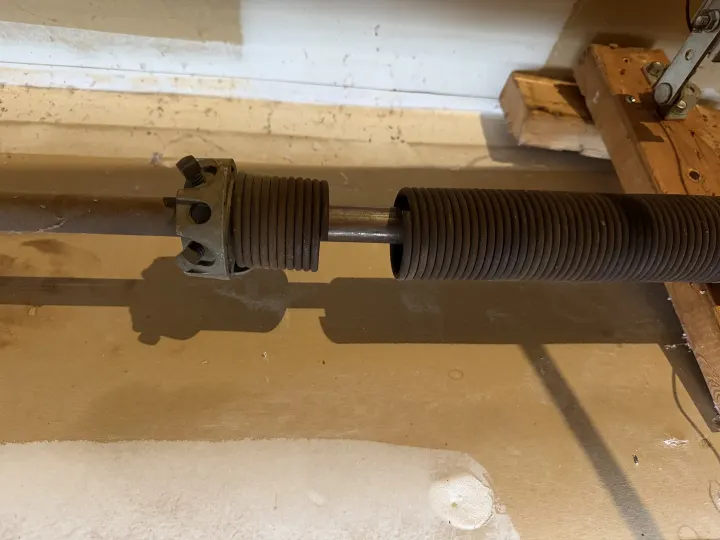
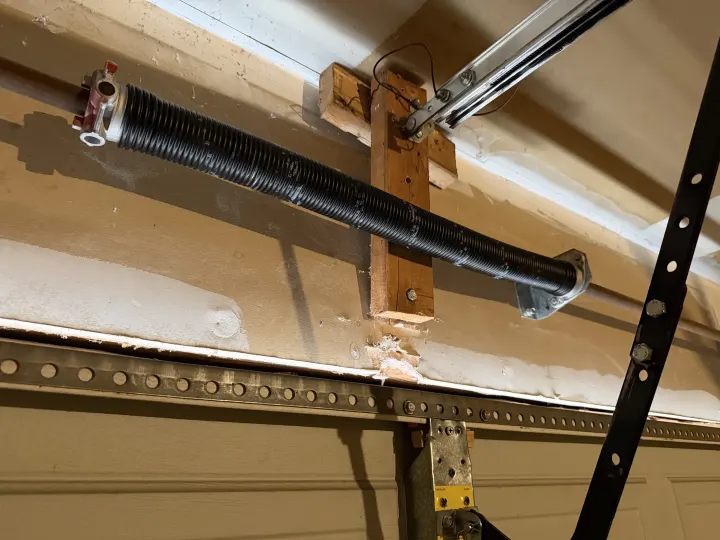
- Maintain room to inspect the opener, rail, spring assembly, drums, cables, brackets, and emergency release.
- Check vehicle height, hatch and door swing, walking paths, storage reach, and the fully open door position.
- Plan outlets, low-voltage wiring, Wi-Fi, lighting, and future controls before walls and ceilings receive final finishes.
Sequence Door Work with Paint, Flooring and Storage
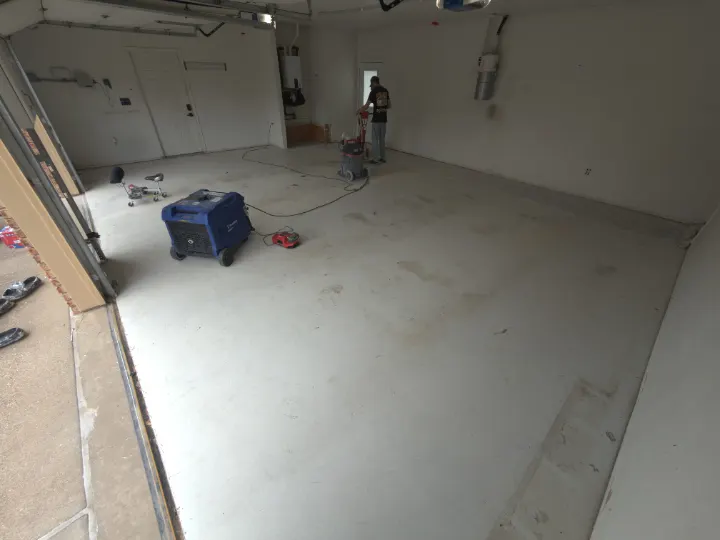
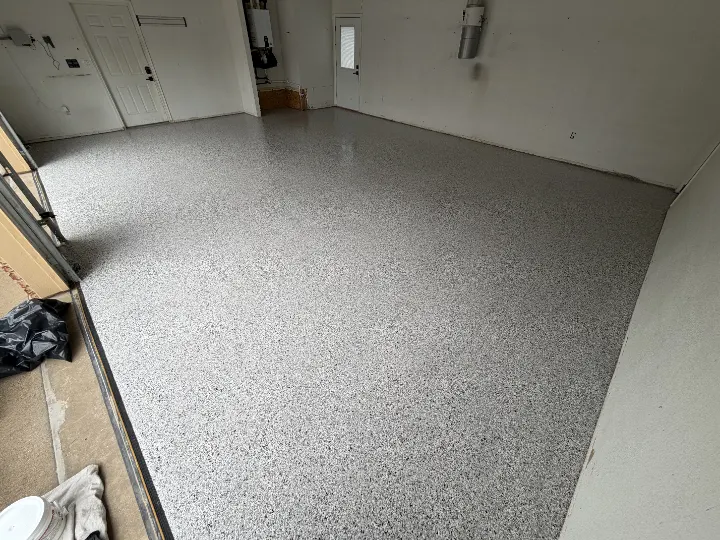
Inspect and complete disruptive door, opener, electrical, ceiling, and track work first when practical. Complete drywall correction and painting before the final floor in many projects, then allow the coating system to reach its required return-to-service window before storage installation or later door access.
When phases must happen in a different order, the written plan should identify access, protection, cure windows, overhead work, dust, ladders, carts, fasteners, and how the finished floor and walls will be protected.
Keep Annual Care in the Finished-Garage Plan
A polished garage still contains moving, loaded components. Leave service access, keep the travel path clear, observe changing noise or motion, follow the installed manuals, and plan a quote-based annual tune-up.
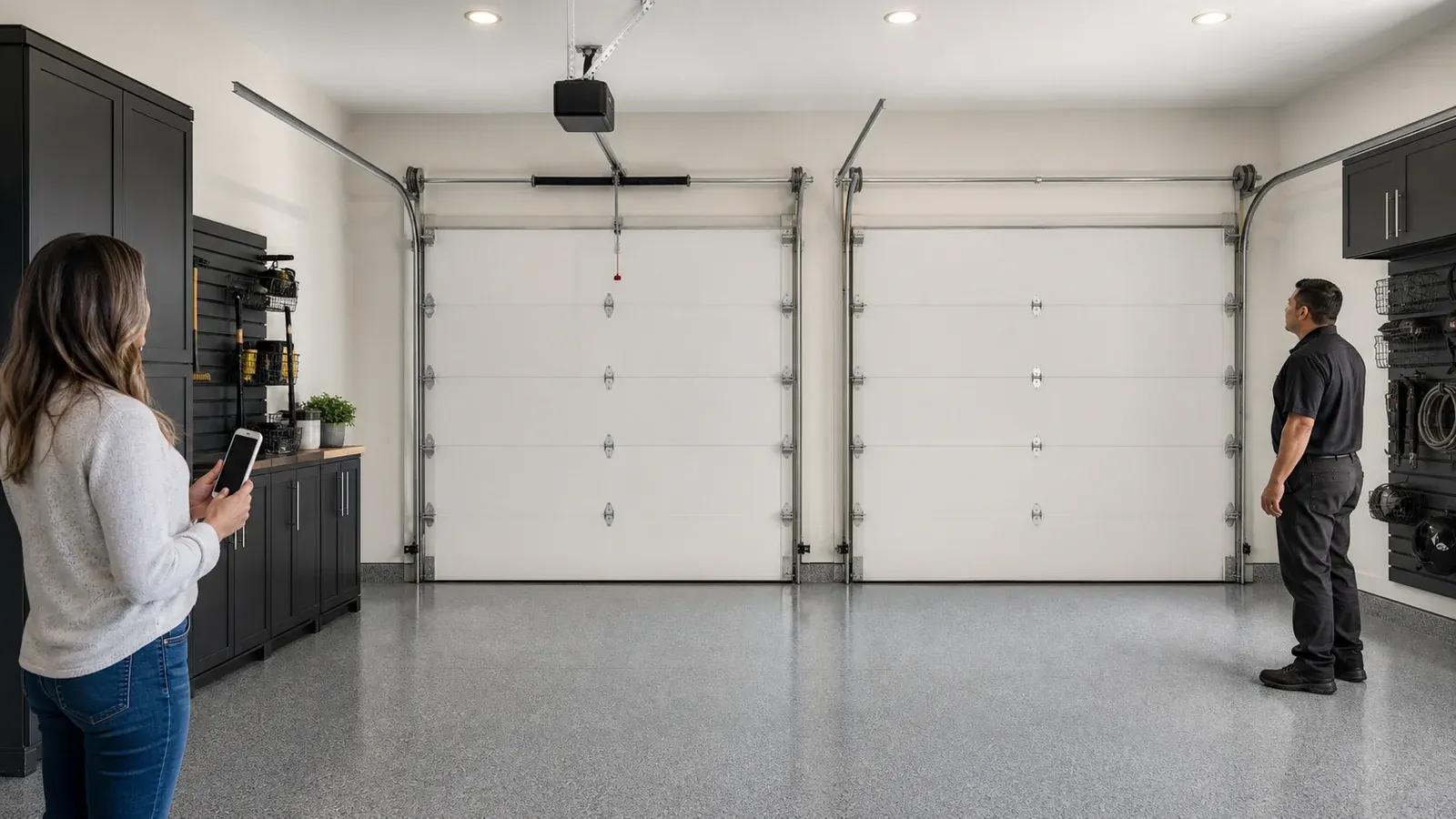
The real Ace project carousel below shows garage-door work and a coordinated Arlington remodel through the existing project system; the educational image above is not a customer project photo.