
Quick Takeaways
- Watch and listen from a safe position for changing noise, uneven travel, rubbing, hesitation, gaps, loose-looking hardware, or damaged components.
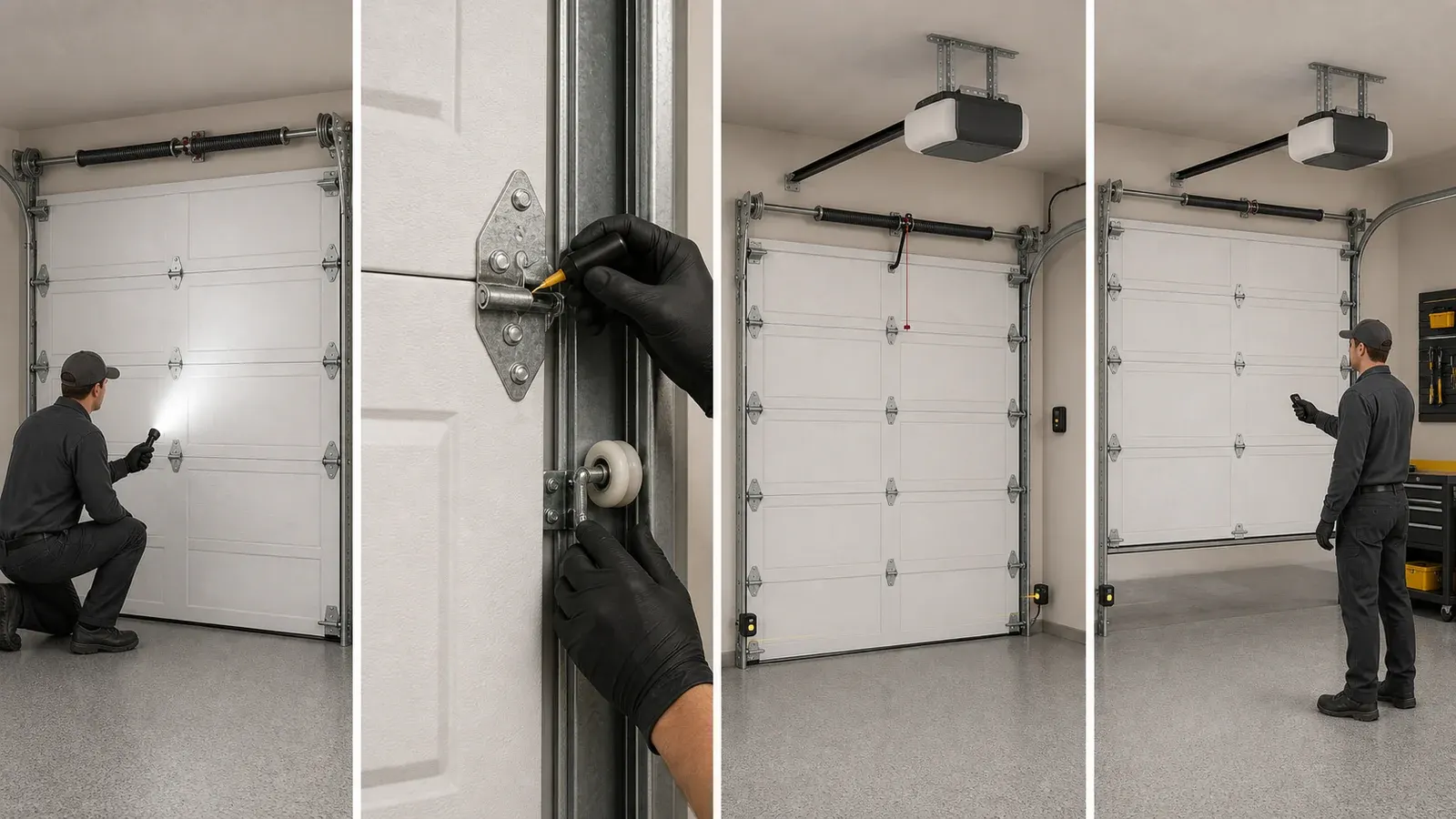
- An Ace annual tune-up includes inspection, appropriate non-tension hardware tightening, manufacturer-compatible lubrication, balance evaluation, opener and attachment review, travel/reversal checks, and photo-eye testing.
- Springs, cables, drums, bottom brackets, and any related tension-system work are technician-only.
What an Annual Tune-Up Covers
Ace begins with the complete existing system instead of treating noise as a lubricant problem. The inspection covers the door, balance system, springs, cables, drums, rollers, hinges, tracks, brackets, opener mounting, door attachment, controls, seals, travel, and applicable safety devices.
Routine maintenance is limited to work that is compatible with the installed system and current manufacturer guidance. Repairs, replacement parts, and upgrades discovered during the tune-up are explained and quoted separately.
Homeowner-Safe Observations
- Stand clear and listen for a new scrape, pop, grind, squeal, vibration, or impact during normal operation.
- Look for uneven travel, a door that appears crooked, rollers leaving the track, frayed cable strands, damaged hinges, loose-looking mounts, or a changing bottom gap without touching the hardware.
- Keep the photo-eye lenses clean and the line between them unobstructed; do not move or bypass a safety device to force operation.
- Check the door area, remote batteries, keypad, lighting, weather seals, and wall control against the installed opener's manual.
- Record the date and symptom when operation changes so the technician can reproduce the condition.
Stop Operating and Request Service When
- A spring is visibly separated, a cable is loose or frayed, or a drum or bottom bracket appears damaged.
- The door is unusually heavy, crooked, jammed, off track, or will not stay in a normal position.
- The opener strains, repeatedly reverses, detaches from the door, or moves a door that binds.
- A panel, track, mounting surface, header, framing connection, or opener support is visibly damaged.
- A safety device cannot be restored through the homeowner checks in the installed model's manual.
Maintenance Does Not Predict Every Failure
Springs and moving parts accumulate use even when the door appears clean. Temperature, corrosion, door weight, imbalance, impact, poor alignment, incompatible components, and prior repairs can also affect service life.
A tune-up can catch visible or testable conditions and improve manufacturer-specified care, but it cannot guarantee that a component will not fail later. The written inspection findings and quote define what Ace observed on that visit.