

Quick Takeaways
- Sweep or vacuum abrasive grit before it is ground into the wear surface.
- Blot and clean spills promptly using the product-specific care instructions provided for the floor.
- Use compatible pH-neutral cleaning first, test unfamiliar products, and keep concentrated pressure away from edges, joints, transitions, and repairs.
Routine Cleaning
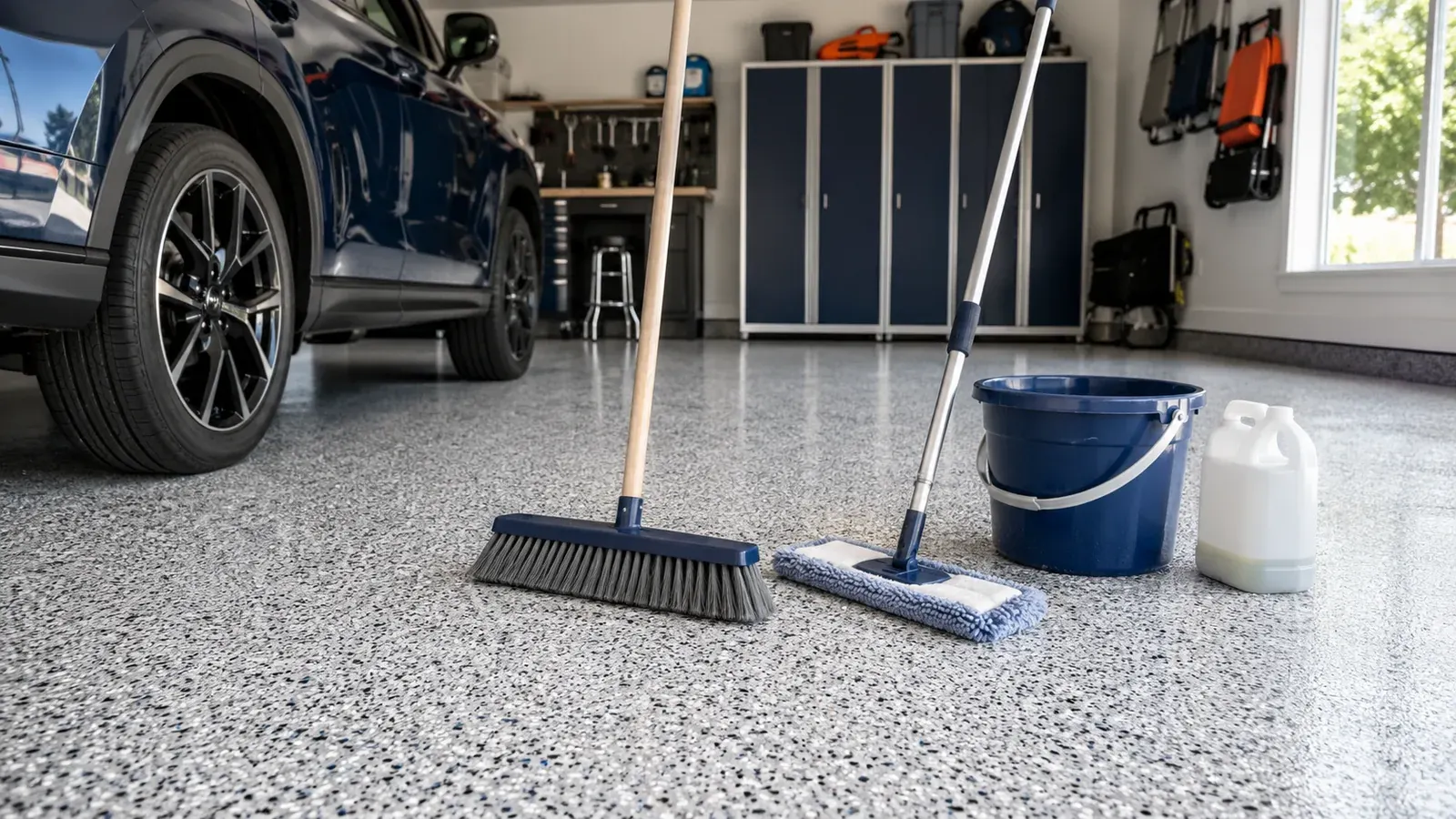
Remove loose dust, sand, road grit, leaves, and other abrasive debris with a soft broom, dust mop, or suitable vacuum. For general washing, use clean water and a compatible pH-neutral cleaner applied with a soft mop or non-abrasive brush.
Product instructions for the installed system take priority. Test any new cleaner in a small inconspicuous area and rinse away residue rather than allowing concentrated cleaner to dry on the finish.
Routine Upkeep vs. Professional Cleaning
Routine upkeep is appropriate for loose grit, light dust, and ordinary spills a homeowner can remove with a soft broom, suitable vacuum, mop, and compatible cleaner. Professional cleaning becomes useful when tire residue, workshop soil, broad traffic film, oily buildup, or repeated cleaner residue needs equipment, controlled pretreatment, agitation, rinsing, or extraction across the full floor.
A professional service should still begin with the installed system and current condition. The cleaner label, available coating records, a small test area, vulnerable edges, joints, repairs, drainage, and the written scope determine the method. General resinous-floor guidance from another manufacturer is context only and does not replace instructions for the floor in front of you.
Spills, Tires, and Seasonal Debris
- Blot vehicle fluids and household spills promptly; do not spread them across the floor.
- Follow local disposal rules and the cleaner label when handling oil, fuel, chemicals, or contaminated wash water.
- Lift stuck debris gently with a plastic tool rather than a metal scraper.
- Use mats or trays where vehicles regularly bring in road salt, mud, or leaking fluids, and keep moisture from sitting against edges.
What a Coated-Floor Cleaning Should Address
- Inspect the topcoat, edges, transitions, control joints, repairs, peeling, bubbling, and other weak areas before wet cleaning.
- Remove dry soil first so sand and grit are not scrubbed into the wear surface.
- Start with compatible pH-neutral cleaning, adding only a targeted surface-safe pretreatment or degreaser that the coating, soil, product label, and test area support.
- Use soft, non-abrasive agitation and control the nozzle, pressure, distance, water flow, rinse, and extraction rather than treating the floor like bare driveway concrete.
- Plan where residue and wash water will go; do not send cleaners, oil, or contaminated wash water into a storm drain.
What to Avoid
- Unapproved acids, strong solvents, abrasive powders, or aggressive degreasers.
- Dragging metal cabinets, jack stands, appliances, or sharp loads directly across the finish.
- Concentrated pressure-washer spray at coating edges, joints, repairs, or transitions.
- Treating the coating as a structural repair for moving cracks, joints, or slab settlement.
When to Contact Ace Garage Pros
Contact us when routine upkeep no longer removes broad traffic film or residue, or if the entire sound floor would benefit from a professionally scoped cleaning. Peeling, bubbling, delamination, failed repairs, and other unsound conditions need evaluation because cleaning will not repair them.
Keep the invoice, installation date, photos, coating records, and service history available when possible so the installed system, cleaning options, and any applicable written warranty terms can be reviewed.
Warranty-claim photos are used for claim administration and are not used as marketing assets without separate permission.