

The short answer
What to know first
- Open wall storage suits visible, frequently used gear; cabinets suit belongings you want enclosed and organized.
- Overhead racks are an option for occasional storage when mounting, clearance and your access preferences support them.
- Compare exact dimensions, compatible accessories and installation requirements. Material names alone do not establish capacity or suitability.
Match the system to the belongings
Start with an item you actually struggle to store. A bicycle, a box of ornaments and a set of small hand tools have different shapes and retrieval needs. Choosing one system for all three can leave you with an organized-looking garage that is awkward to use.
| System | Useful for | Check before choosing |
|---|---|---|
| Slatwall | Visible tools, sports gear and irregular items on compatible accessories | Accessory fit, loaded projection, mounting and exact ratings |
| Open shelves | Bins and supplies you want to see and retrieve directly | Usable shelf depth, bin fit, reach and attachment requirements |
| Cabinets | Enclosed belongings, small-item organization and a coordinated work area | Internal dimensions, doors, drawers, worktop and vehicle clearance |
| Overhead racks | Occasional-use bins and suitable bulky belongings | Structure, door travel, vehicle height, loading and how you will reach items |
Make frequently used belongings simple to return
Hooks and baskets can give helmets, bags and yard tools an obvious home. Shelves can keep labeled bins visible without a cabinet door in the way. Put frequently used items within a comfortable reach for the person who uses them; an adult’s convenient height may be unsuitable for a child.
Check the occupied depth, not just the empty panel or shelf. A bike handlebar, a basket or a tool on a hook can project into the parking area. Open storage also leaves belongings visible, which some households prefer and others would rather enclose.
Compare cabinet depth and construction against your use
Start with the largest item that must fit inside. Exterior cabinet width and depth do not tell you the usable shelf opening or drawer space. Then check the cabinet in the room: doors and drawers need room to open while someone stands in front of them.
Compare shelf adjustability, drawer arrangement, hinges, finish, worktop options and the exact installation requirements. A deeper cabinet may hold more but leave less room beside a vehicle. A shallower configuration can be the more useful choice in a tight garage, even when a larger option looks impressive in a catalog.
If you want lockable storage, confirm which doors or drawers actually lock. An ordinary cabinet is not automatically appropriate for every household chemical. EPA recommends following product storage labels and retaining original containers; choose storage around those instructions.
References: EPA: storage and handling of household hazardous products
Choose overhead storage only if you will use it comfortably
Overhead storage can move occasional-use belongings out of the daily working area. It is less appealing for something you retrieve every morning or for anyone who prefers to avoid climbing to reach a bin. Decide how you will load and retrieve belongings before reserving ceiling space.
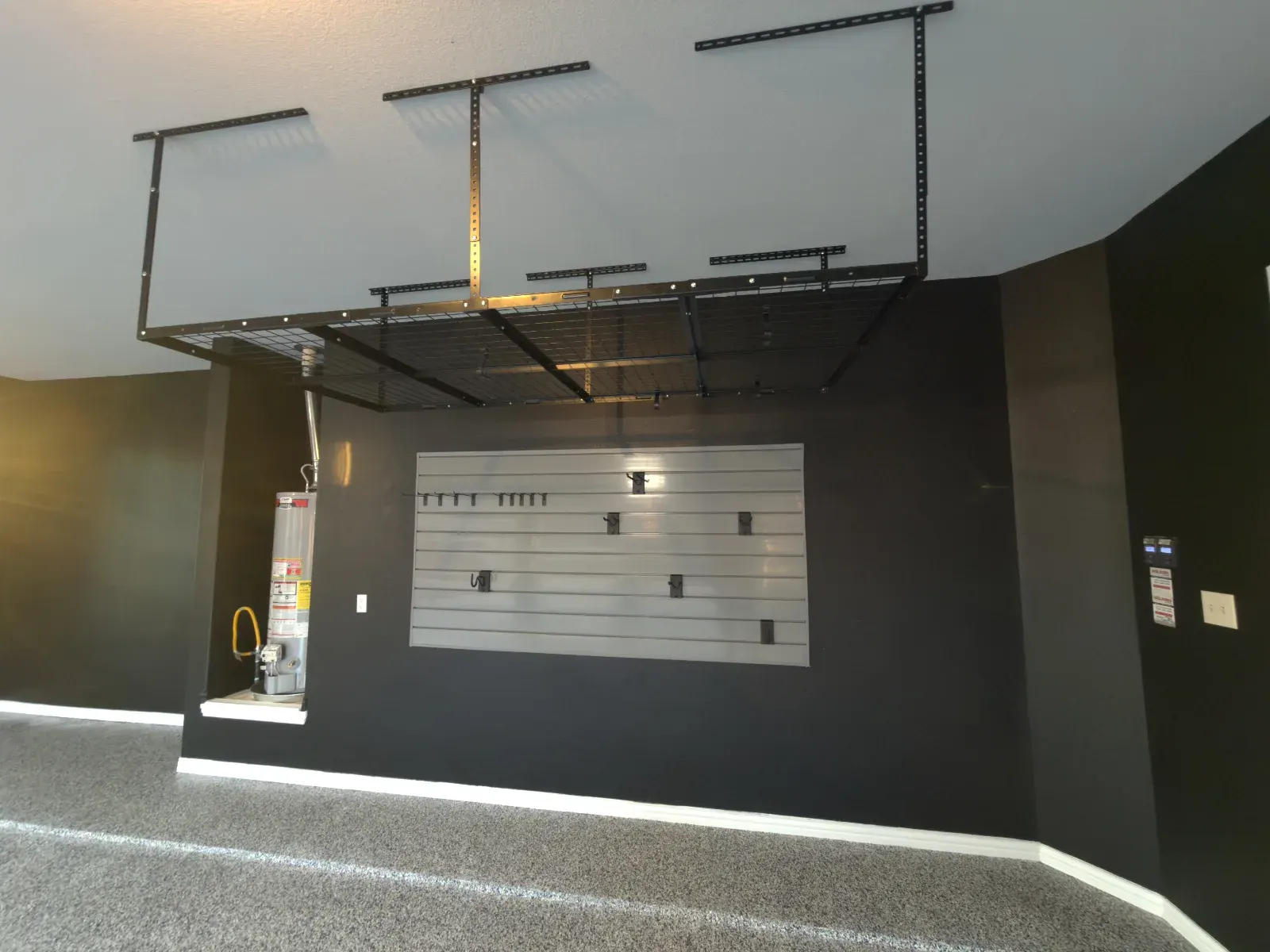
An empty ceiling photograph cannot confirm an installation. The open garage door, tracks, opener, lights, attic access and raised vehicle hatch all matter. The proposed rack and its attachment must suit the actual structure. A large stated capacity is not a reason to place awkward, heavy items where you cannot comfortably handle them.
Compare slatwall as a complete system
PVC, reinforced-core and aluminum describe materials, not a universal ranking. Compare the exact panel dimensions, finish, accessory selection, mounting instructions and product-specific ratings. Choose accessories for your belongings rather than assuming every hook fits every panel.
A panel rating and an individual hook rating answer different questions. Attachment and load arrangement also matter. Manufacturer instructions are the relevant reference; the linked industry manual illustrates these distinctions but is not a specification for the products in your Ace quote.
References: Manufacturer installation manual: wall systems and accessories (industry example)
A useful garage can combine several systems
Consider a household with sports bags, holiday bins and repair tools. Wall accessories can keep the bags accessible, an appropriate seasonal zone can hold the bins, and drawers or cabinets can organize the smaller tools. That mix follows the belongings instead of filling every wall with one product.
The published Lewisville remodel shows wall and overhead storage together in a real garage. Use it to see how the systems can coexist, then check your own parking and access needs. Your next step is a short list of the jobs each storage zone should do.
Sources and further reading
Product instructions apply to the named product and conditions. Your agreed scope and project-specific instructions describe your installation.
Your next useful step